Q and A with Ron Skylstad of Fieldhouse
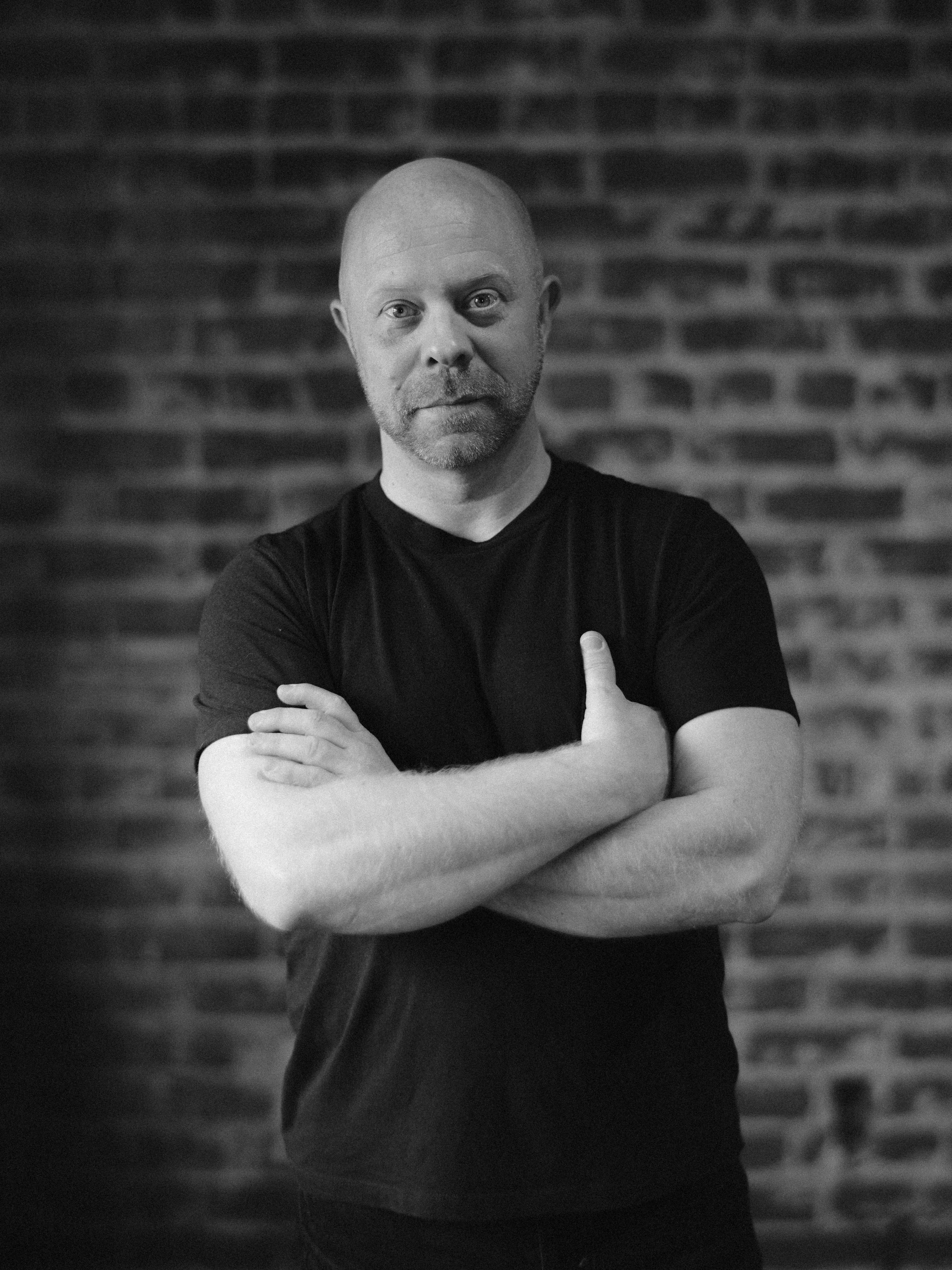
Ron Skylstad’s path wasn’t a straight one to get to where he is now (whose is?). He studied psychology before turning his sights toward design, traveled deep into the Amazon rainforest in hopes of finding his passion again, and has become a fierce supporter of preserving local character while also being vocal about the homogeneity that can creep into small towns and hold back the growth of the valley. Born and raised in Cashmere, he moved far and wide to explore, only to find himself back in the town that shaped him, with a renewed appreciation for everything that continues to influence his life and his work.
I first became aware of Ron, or rather Norse Creative, when I was walking down Wenatchee Ave and saw the Norwood Wine Bar logo appear on their window. Up until that point, most of the branding I saw around Wenatchee didn’t truly reflect the character or heritage of the valley. This one felt different. Modern yet rustic. Upscale and also approachable. After some deep googling, I found Norse Creative was responsible for the branding. As a fellow graphic designer I was intrigued. I kept the studio in the back of my mind for years, until another logo caught my eye. More googling. This time the studio was called In Case of Success. I had no idea it was the same person. I was obsessed with the name. Clever and honest. After meeting Ron and hearing the story behind it, I loved it even more.
Today his studio is called Fieldhouse, a name that feels exactly right for where he is headed. I met Ron for this interview at Azul Cantina in Cashmere. The minute he walked in, he greeted me with a warm smile, then was immediately greeted by several people he knew, including his brother.
Q: Do you know those people?
Ron: Oh, yeah, he is my brother, and I know most everyone here. Small town life means you cannot go anywhere without bumping into people you know.
Q: It is great to finally meet you. I loved your previous studio name, In Case of Success. Your studio is Fieldhouse now. How did that come about?
Ron: Norse Creative was my first real studio name. Visually it worked. It stuck in people’s minds. The problem showed up every time I was on the phone. I would say, “Ron at Norse Creative,” and people heard “North Creative” and assumed I could not say my r’s. They would send emails to northcreative dot com, which did not exist. That became a real problem for a business that runs on email.
After Covid I hit a wall. I was self employed and I was not going to get unemployment or a PPP loan, so my mindset became, “Any nickel on the table, I am going to grab it.” I said yes to everyone. A lot of people I had worked with suddenly realized they had to be visible online and had no online presence. They needed websites, social media, branding, everything. I said yes to all of it and completely burned out.
A client and friend from South Carolina asked how I was doing and I told her, “I am just fucking tired. Inside I feel threadbare.” She suggested a classic resort vacation. Sit by a pool, read a book. That sounded like torture. I did not want to listen to kids yelling and shallow conversations around me.
She asked, “Then what does sound good?”
I heard myself say, “I want to walk into a jungle and a month later walk out.”
That became the seed for In Case of Success. After that trip, I saw a clipping of an old Ernest Shackleton ad that said something like, “Low pay, danger, may not make it back alive. Honor and recognition in case of success.” I thought, this is every small business I know. You might lose everything. But if you manage to pull it off, in case of actual success, then what if?
So I renamed the studio In Case of Success. It was a mantra. It also confused some people and attracted a lot of executive coaches and self help folks.
Fieldhouse is the first name that feels like my actual voice. It has that rural, blue collar, gym floor energy yet still leaves room for world building and a little magic. It feels like a place, not a slogan. That is what I do. I build places and worlds for people to live and work in, even if it is “just” a logo and a sign.
Q: You grew up in Cashmere and studied psychology before design. How did that path shape the way you work now?
Ron: I grew up along the Wenatchee River, mostly in and around Cashmere in the nineties. Teachers knew I could draw. That turned into, “Can you do the yearbook cover, can you paint the mural on the gym wall.” No one ever said, “This could be your job.” Around here, if you needed a logo, you went to the sign shop. The sign maker designed your sign, and that sign became your logo and later your Facebook avatar. That was the whole brand process.
I did not want to be a sign maker, and I did not know there was anything else. So I went to college, majored in psychology, and thought I might be a therapist. Then I realized I could not sit in an office for eight hours a day listening. That is not how I am wired.
I spent about fifteen years working for small nonprofits. Tiny budgets, big dreams. I taught myself how to build websites, how to use InDesign, how to lay out newsletters and posters. I am mostly self taught on the tools, but the psychology degree never left. I am always asking, what informed this decision, why did I choose that, how will this feel to the person on the other end.
I might love a logo, but if the customer does not connect, it is not doing its job. The psych background keeps me curious about the other side of the equation, how the work is experienced rather than just how it looks.
Q: You mentioned burning out and then disappearing into the Amazon. Can you share that story and what shifted for you there?
Ron: With all the post Covid work, I hit a point where I was done in every way. A client asked how I was and I finally told the truth. “I am just fucking tired. Inside I feel threadbare.”
She suggested a pool, a resort, a book, and I said that sounded like a nightmare. When she asked what did sound good, I said, “I want to walk into a jungle and walk out a month later.”
I had a contact in Peru from a previous job. He connected me with a friend whose brother lived in a small village up a tributary of a tributary of the Amazon. The plan was simple. Go stay with this guy, help out around the house and village, disappear for a while.
When I landed in Peru my friend met me and said, “There is a change of plans. The brother had to go farther up river for work. Just get to the village. He will meet you there.”
I get to this little village and nobody is there. I stand on the riverbank for four hours while people come out to stare at the lost gringo. They ask if I am lost and need help going home. I tell them the name of the man I am waiting for and they say, “No one by that name lives here.”
The sandflies are eating me alive, I am roasting, and it dawns on me that I have no signal, no way to contact anyone, no easy way out, and no one expects to hear from me for almost a month. I let myself panic for about five seconds. Then something very practical clicked in. I need shelter, food, and water. Then we will work out the rest.
I ended up finding a place to stay. I befriended an older man with one tooth who took me into the jungle to show me plants, fishing spots, everything. I had forgotten earbuds and gadgets, so I had almost nothing to distract me. Just a journal and one book, the biography of David Chang.
So I had a lot of hours to sit with myself. No internet, no noise, no comfort scroll. Just me.
At one point I remember sitting on a bench and realizing, very clearly, “I do not believe good things are for me. I do not believe I am the kind of person success happens to. I attach myself to successful people and that feels like the best I can hope for.” That hit hard.
I looked around and thought, “Nobody knows if I am alive. I am surviving on bread and water and beer. I am doing fine. What if I pull this off. What does that mean when I go home and apply that same belief to my business, my marriage, my life?”
That trip did not just give me a break. It cracked open a belief about what I deserve and what I am capable of. Fieldhouse lives on the other side of that.
Q: You use the phrase “heritage informed design.” What does that mean to you in the context of the Wenatchee Valley and small towns like Cashmere?
Ron: For me, heritage informed design starts with context. It is not about sepia tones or old timey fonts. It is about understanding who and what shaped a place or a person.
When I take on a project, I sit with the owner and ask them to tell me their story. Why this idea, why now, why here. They always start with the human pieces.
At a community level, I sit in an odd middle ground. I grew up here, left, traveled, and returned. People who never leave sometimes miss what is special about this place. People who leave and never return decide it is backward. I understand both sides.
I am not trying to freeze the past. But I am also tired of every town trying to look like the same generic “cool” place the algorithm says is relevant. When you chase that, you lose yourself.
Heritage informed design asks what is good and specific about a place that is worth carrying forward, and how to give it a fresh, honest update without turning it into a theme park.
Nostalgia plays a role. It is not about living in the past. It is your body reacting to something that shaped you. A song, a sign, a street. Those things become anchors. If we bulldoze or paint over all of them, we lose the anchors.
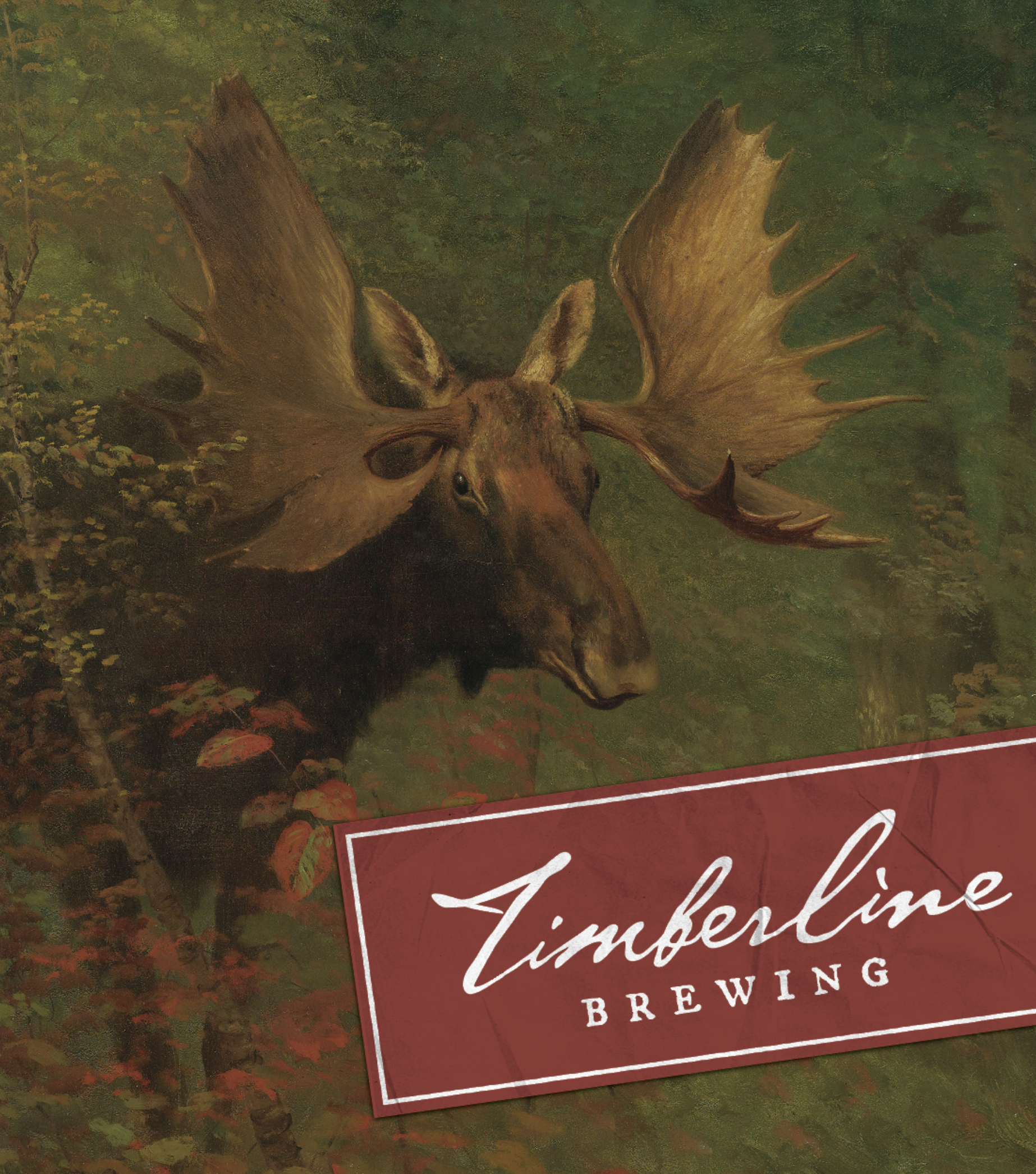
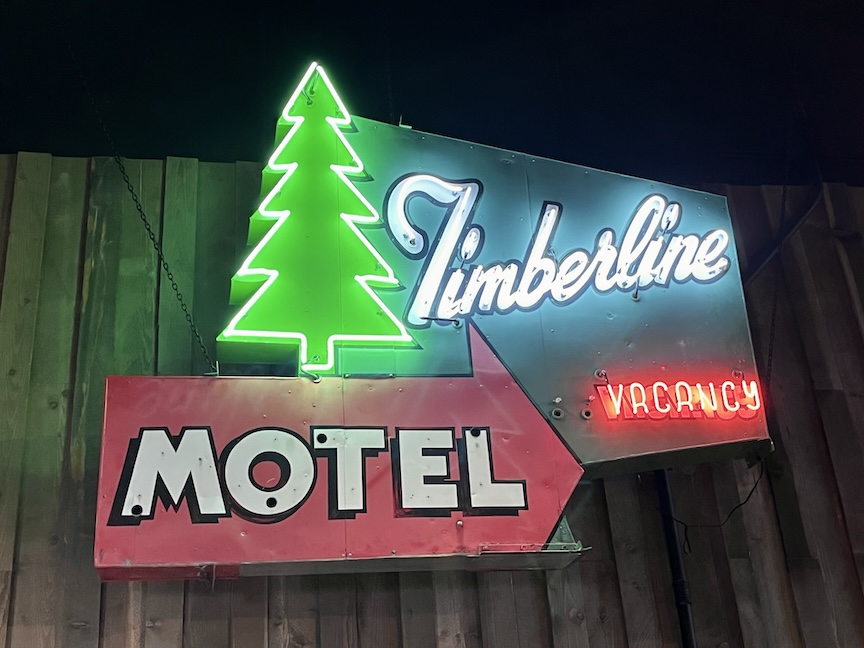
Q: You worked with Timberline Brewing to create their space and identity, which includes that awesome Timberline Motel sign. Can you tell the story of that sign and what it represents for you as a designer?
Ron: That sign is almost single handedly why I became a designer.
When I was a kid we drove to Ski Hill in Leavenworth every Saturday. We always passed the Timberline Motel sign. Back then it was still lit. Green neon tree, beautiful typography, that little line about there always being room at Timberline. I remember staring at it and thinking, that is the perfect green, that is the perfect tree shape, those are the perfect letters. It was magic.
In high school the sign stopped working. It fell into disrepair and I kept driving past it thinking, “Somebody should save that.”
Years later I am talking with Eric, who owns Blewett Brewing and Timberline. He says, “You know that old Timberline Motel sign.” I said, “It is the greatest sign ever made. That sign is why I got into design.” He asked, “Do you think there is a way we could get it.”
We tracked down the owner and said, “If we show up with a crew and take it down carefully, can we buy it from you.” They agreed. I then went on a little quest to find someone who could restore the neon. I finally found the last tube bender in eastern Washington, in Yakima.
We had the tubes rebuilt, the electrical updated, the face cleaned and repaired. Then we installed it at Timberline Brewing. Now when you walk in, that sign is there. It flashes again. It has a new home.
When we posted about saving it, people came out of the woodwork. Folks said, “We were so sad when we thought that sign got scrapped. We are so happy it is still here.” There were a lot of memories attached to it. Ski trips, family drives, first overnights out on their own.
To me that is heritage informed design in one object. We did not put the sign in a museum. We put it in a working space where people gather, drink beer, and tell stories. It keeps a piece of the valley’s visual history alive in a way that feels current. That is what I want to do again and again.
Q: How do people usually find you, and what kind of projects are you most excited about under Fieldhouse?
Ron: I have never really advertised. People usually see something out in the world, ask, “Who did this,” and someone says, “Oh, that is Ron, he is my guy.” That creates these funny overlapping circles.
I do a lot of work for leadership consultants in southern California. I also do projects for scientists, botanists, and entomologists who do not want cartoon logos for their conferences. They want something that honors the science and still feels human. Then there are the rural projects. Breweries, small businesses, adaptive reuse projects that want to feel like they belong to their town, not to a trend.
The ones that light me up are the Fieldhouse projects that pull all of that together. Something with roots. A story. A bit of risk. A chance to save or create an anchor for a community. If there is an old sign, an odd object, or a building everyone drives past without really seeing, that is usually where I want to start.